
Exploring the Evolution of Floor Coverings — What It Means for Today’s Florida Homes
Flooring is more than just what you walk on — it’s a reflection of technology, culture, design trends, and even geography. From the timber planks beneath the feet of medieval builders to the advanced modern luxury vinyl planks installed in Florida kitchens and coastal condos, the history of flooring is a story of innovation and adaptation. Understanding that journey helps homeowners appreciate how today’s floors evolved — and why certain materials are popular in regions like Florida.
In this article we’ll explore:
- Ancient flooring beginnings
- The rise of hardwood flooring
- Industrial age innovations
- The arrival and evolution of vinyl
- How modern flooring responds to today’s needs
- What Florida homeowners should know about flooring history and trends
Let’s begin at the very beginning.
1. Early Flooring — From Dirt to Durable Materials
Flooring in its earliest form was very basic — earth, clay, and flat stones laid down simply to ease walking and provide a stable surface. As human civilization advanced, people developed techniques to lay more refined materials.
In ancient Egypt and Greece, stone and marble floors were not only functional but also symbols of luxury in temples and villas. In other regions, clay tiles offered a practical solution for homes and community buildings. Rugs and woven mats added comfort, especially where stone or dirt floors were too cold or rough.
While these early floors lacked the sophisticated engineering of today’s products, they set the foundation — literally — for centuries of innovation.
2. Wood Flooring — A Long Standing Tradition
Wood became a dominant flooring material due to its availability, warmth, and natural beauty.
Medieval to Renaissance
By the Middle Ages (around 400 A.D.), wooden planks began replacing simpler dirt and stone floors in homes and castles across Europe, offering insulation and a more finished appearance. As woodworking techniques advanced, craftsmen developed parquet floors — decorative wood patterns that added elegance and detail to grand spaces.
Industrial Revolution and Mass Production
The Industrial Revolution transformed wood flooring from a handcrafted luxury into a more commonly affordable feature in homes. Steam‑powered sawmills and improved machinery made it possible to cut wood precisely and efficiently. The introduction of tongue‑and‑groove boards provided tighter fitting seams and more stable installations than earlier planks.
Around this time, hardwood floors became widespread in American homes — oak, maple, and pine were common choices for their beauty and resilience.
Hardwood in America
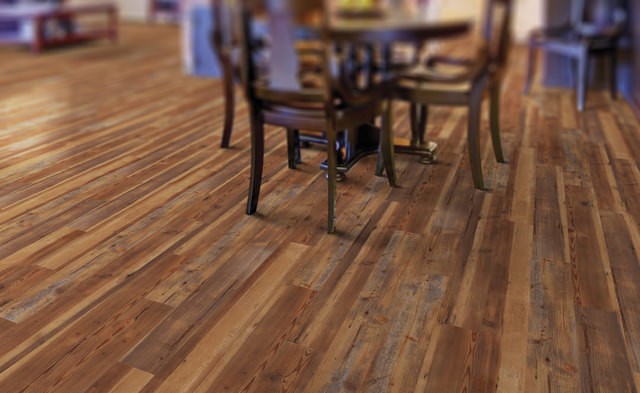
In the early 20th century, hardwood floors became a symbol of quality in U.S. construction. Craftsmen laid solid wood planks one by one, and the floors could be refinished over decades — a key reason many older homes today still show beautiful original wood beneath newer coverings.
As tastes changed in the mid‑20th century, many homeowners covered these hardwood floors with carpet or other materials — but in recent decades hardwood has enjoyed a resurgence, prized for its timeless appeal and long lifespan.
3. The Emergence of New Materials — Linoleum, Rubber, and Carpets
The late 19th and early 20th centuries brought sweeping changes to flooring technology.
- Linoleum, invented in 1863 by Frederick Walton in England, combined linseed oil, cork dust, and resins into a wear‑resistant floor covering. It became common in kitchens and high‑traffic areas.
- Rubber, cork, and asphalt tiles emerged as practical alternatives for homes and businesses with softer surfaces underfoot.
- In the United States, the carpet industry took off around the 1790s, but synthetic fibers like nylon and polyester in the mid‑20th century made wall‑to‑wall carpeting affordable and ubiquitous in living rooms and bedrooms.
While these products offered comfort and affordability, they also laid the groundwork for even more resilient, cost‑effective flooring materials — including vinyl.
4. Vinyl Flooring — A 20th Century Breakthrough
The invention of vinyl flooring in the early 20th century marked a major turning point.
The Birth of Vinyl
The story begins in 1926 when American chemist Waldo Semon at the B.F. Goodrich Company developed a process to make polyvinyl chloride (PVC) flexible and durable. This innovation led to the first forms of vinyl flooring — a resilient and inexpensive alternative to wood, tile, and linoleum.
Vinyl flooring truly took off in the post‑World War II housing boom of the 1940s and 1950s as a practical, easy‑to‑install material. Its popularity was boosted by its water resistance and the ability to produce it in rolls, tiles, and planks, which fit diverse design needs.
Expanding Designs
In the 1950s and 1960s, vinyl flooring became a design staple. Homes featured bold checkerboard patterns, colorful prints, and faux wood or tile looks that made it versatile for kitchens, bathrooms, and utility spaces.
5. Laminate Flooring — Wood Looks for Less
The next major evolution in the flooring story was laminate flooring.
In 1977, Swedish innovators at Perstorp developed what would become Pergo, the first true laminate floor product. Its layered construction — a high‑resolution decorative image atop a dense core — gave homeowners an affordable way to mimic hardwood.
Laminate became especially popular in the 1980s and 1990s as a budget‑friendly alternative that could be installed quickly with “click‑lock” systems, requiring no nails or adhesives. It brought style closer to DIY homeowners and those renovating older homes without the cost of solid wood.
6. Luxury Vinyl and Modern Innovations
While basic vinyl provided a solid start, the 21st century brought even more advanced products.
Luxury Vinyl Tile (LVT) and Plank (LVP)
Luxury vinyl evolved by combining PVC with high‑definition printing and surface textures that mimic wood and stone with astonishing realism. Products like LVT and LVP offered durability, waterproof properties, and comfort underfoot — making them ideal for homes with children, pets, and moisture challenges.
In the United States, the LVT market exploded especially after the introduction of wood plastic composite (WPC) and later stone polymer composite (SPC) cores, which enhanced stability, longevity, and waterproof performance.
Today, luxury vinyl is among the fastest‑growing flooring categories in the U.S., often offered in styles that look indistinguishable from real hardwood or tile — but at a fraction of the upfront and maintenance cost.
7. Flooring in the Sunshine State — Florida’s Unique Needs & Trends
Florida’s climate — hot, humid, and often wet — influences flooring choices differently than in colder or drier regions.
Moisture and Material Choices
Solid hardwood can struggle in high‑humidity environments like Florida due to expansion and contraction. That’s why many Florida builders and remodelers prefer alternatives like:
- Engineered hardwood, which offers wood beauty with better moisture resistance
- Tile, which handles humidity and cool temperatures well
- Luxury vinyl plank (LVP), which is 100% waterproof and suitable for bathrooms, kitchens, and even coastal homes
All of these options balance style with Florida’s environmental reality — helping floors remain stable and attractive year‑round while resisting moisture‑related issues.
Design Trends in Florida
In Florida homes, flooring often reflects lifestyle as much as climate. Open floor plans, coastal color palettes, and indoor‑outdoor living spaces favor:
- Varied grain wood looks
- Earthy neutral tiles
- Waterproof luxury vinyl throughout main areas
- Cool, light tones that balance sunshine and heat
These trends echo broader national developments but are especially popular among Florida buyers seeking both practicality and aesthetic appeal.
8. Flooring Through the Decades — A Cultural Perspective
Beyond technology, flooring history also traces how lifestyles and tastes changed:
1950s & 1960s
After WWII, vinyl surged and carpet became widespread. Families embraced comfort and cleanable surfaces, while patterned floors and bold colors reflected mid‑century optimism.
1970s & 1980s
Laminate grew as a budget‑friendly wood look. Carpets in shag and textured styles filled living rooms. Vinyl continued in kitchens and bathrooms.
Late 20th & Early 21st Century
Homeowners began bringing wood floors back into vogue, refinishing old hardwood and choosing engineered wood for modern builds. Vinyl transformed into luxury vinyl, prized for performance without sacrificing style.
Today’s flooring landscape blends the best of tradition and innovation — combining beauty, durability, and functionality.
9. Why Flooring History Matters to Homeowners Today
Understanding the history of flooring isn’t just an academic exercise — it gives homeowners context for:
- Why certain materials dominate today
- How design trends evolved
- What performance characteristics matter most in specific environments
- How choices like luxury vinyl or engineered wood can be both practical and stylish
For Florida homeowners, this context helps explain why waterproof, stable, and low‑maintenance floors are often best — because the history of flooring innovation has led to options that work in diverse climates while satisfying modern design tastes.
10. The Future of Flooring — What’s Next?
Flooring keeps evolving with technology and sustainability in focus:
- Eco‑friendly materials: Reclaimed wood, bamboo, cork, and recycled vinyl products are gaining traction as environmental awareness grows.
- Smart flooring technologies: Integrated sensors and heated flooring systems are becoming more common.
- Advanced visuals: High‑definition imaging and textures blur the line between real hardwood and synthetic alternatives.
As technology continues, homeowners will enjoy more choices that balance sustainability, performance, and design — continuing the long journey that began with stone slabs and timber planks.
Conclusion
From the first stones laid in ancient palaces to the latest waterproof luxury vinyl planks installed in modern Florida homes, the history of flooring reflects human ingenuity, evolving needs, and shifting style preferences. Each era brought innovations that reshaped how we live, work, and design our spaces.
Today’s homeowners benefit from centuries of evolution — with floors that offer:
- Durability
- Moisture resistance
- Realistic aesthetics
- Affordable installation
- Low maintenance
Understanding that history helps you make smarter choices for your own home — whether you’re renovating a Florida coastal bungalow, updating a kitchen in Orlando, or designing a luxury condo in Miami.
Flooring isn’t just a surface — it’s a legacy underfoot.